
Promotion of Breast Feeding
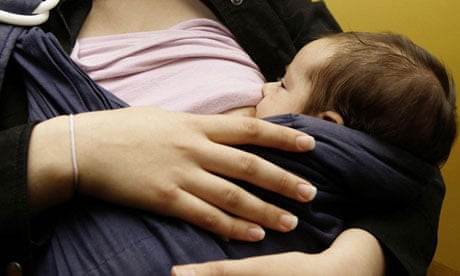
Promotion of Breast Feeding
As per the UNICEF Report “The State of World’s
Children, 2015”, the rate of early initiation of breastfeeding in South Asia is
39% and that of exclusive breastfeeding is 47% which is lower than India. In
India, as per the recent Rapid Survey on Children, 2013-14, the rate of early initiation
of breastfeeding is 44.6% and exclusive breastfeeding up to the age of 6 months
is 64.9%.
This Ministry is taking following steps for promotion of breastfeeding in the country:
• National Guidelines on Infant and Young Child Feeding, 2006, have been issued, through which appropriate Infant and Young Child Feeding (IYCF) practices are emphasised.
• Infant Milk Substitutes Feeding Bottles, and Infant Foods (Regulation of Production, Supply and Distribution) Act, 1993, as amended 2003,has been enacted in the country to protect and promotebreastfeeding and ensure proper use of infant foods.
• Recently, the National Steering Committee on Infant and Young Child Feedingand National Coordination Committee on Infant and Young Child Feeding have been notified to give policy guidelines, coordinate and integrate all activities relating to breastfeeding and IYCF and advise on measures to promote breastfeeding.
• The restructured ICDS Mission also aims to increase Infant and Young Child Feeding Practices in the country. Under the Care and Nutrition Counseling component, focus is to provide counseling to women on issues relating to infant feeding practices. Under the Mission, there is also provision of an additional Anganwadi Worker in 200 High Burden Districts of the country for imparting counseling and behavior change communication through community and home visits as well as demonstration of appropriate feeding practices.
• Indira Gandhi MatritvaSahyogYojana (IGMSY), which is a centrally sponsored Conditional Maternity Benefit scheme for pregnant and lactating women, aims to improve nutritional and health status of pregnant and lactating women across the country by partly compensating for their wage loss. The scheme encourages women to follow optimal Infant and Young Child Feeding practices including early and exclusive breast feeding for the first six months. The scheme is now operational in 53 selected districts across the country.
• Food and Nutrition Board under the Ministry is engaged in creating awareness on health and nutrition issues with strong focus on ‘Infant and Young Child Feeding’ (IYCF). “World Breastfeeding Week” is also celebrated every year from 1-7 August by organizing various activities such as State level Workshop/ Seminar, lecture-cum-practical demonstration, etc. for creating greater awareness. Awareness is also generated through audio-visual medium for promotion of optimal IYCF.
This information was given by the Minster for Women and Child Development, Smt Maneka Sanjay Gandhi in reply to a question in the Rajya Sabha today.
******
IT Enabled real time monitoring of ICDS to be one
of key components of ISSNIP
Information and Communication Technology enabled
Real Time Monitoring (ICT-RTM) of ICDS has been included as one of the key
activities for implementation in restructured ICDS Systems Strengthening and
Nutrition Improvement Project (ISSNIP) in 162 high malnutrition burden
districts of 8 States. These states are Uttar Pradesh, Madhya Pradesh,
Maharashtra, Bihar, Rajasthan, Chhattisgarh, Jharkhand and Andhra Pradesh. ICT
enabled Real Time Monitoring would provide real time information on service
delivery at Anganwadi Centres (AWCs) including growth and nutrition status of
children. ICT-RTM would be driven by a Common Application Software (CAS), an
Android based solution having six tiered Dash Board with AWC as the basic
information generation node.
This information was given by the Minster for Women and Child Development, Smt Maneka Sanjay Gandhi in reply to a question in the Rajya Sabha today.
This information was given by the Minster for Women and Child Development, Smt Maneka Sanjay Gandhi in reply to a question in the Rajya Sabha today.
******
Revised Guidelines of RGNCS envisages provision of
safe, secure & child friendly place for children in crèches
The guidelines of Rajiv Gandhi National Crèche
Scheme have been revised w.e.f.01st January, 2016 and new guidelines envisage
provision of safe, secure & child friendly place to the children.
Provisions of regular monitoring of creches have also been made. Regular
monitoring of crèches is done by Implementing Agencies i.e. Central Social
Welfare Board and Indian Council for Child Welfare. Creches under Grih Kalyan
Kendra are frequently visited by their supervisory staff and creches under
Department of Posts are monitored by Departmental Employees.
The Ministry of Women & Child Development is implementing Rajiv Gandhi National Creche Scheme through Central Social Welfare Board and Indian Council for Child Welfare. In addition, Department of Personnel and Training under the Grih Kalyan Kendra and Department of Posts under its own scheme are running crèches. No cases related to safety & abuse of children in the crèches have come to the notice.
Under Integrated Child Protection Scheme (ICPS), financial assistance is provided to State Governments/UT Administrations/Non-Governmental Organisations for inter-alia, setting up of various types of Children Homes including Specialised Adoption Agencies. The State Governments/UT Administrations are required to ensure, through regular inspection and monitoring that the institutions are run as per the provisions of the Juvenile Justice (Care & Protection of Children) Act, 2015.
This information was given by the Minster for Women and Child Development, Smt Maneka Sanjay Gandhi in reply to a question in the Rajya Sabha today.
The Ministry of Women & Child Development is implementing Rajiv Gandhi National Creche Scheme through Central Social Welfare Board and Indian Council for Child Welfare. In addition, Department of Personnel and Training under the Grih Kalyan Kendra and Department of Posts under its own scheme are running crèches. No cases related to safety & abuse of children in the crèches have come to the notice.
Under Integrated Child Protection Scheme (ICPS), financial assistance is provided to State Governments/UT Administrations/Non-Governmental Organisations for inter-alia, setting up of various types of Children Homes including Specialised Adoption Agencies. The State Governments/UT Administrations are required to ensure, through regular inspection and monitoring that the institutions are run as per the provisions of the Juvenile Justice (Care & Protection of Children) Act, 2015.
This information was given by the Minster for Women and Child Development, Smt Maneka Sanjay Gandhi in reply to a question in the Rajya Sabha today.
******
13.49 lakh operational Anganwadi Centres in the
country as on 31st December, 2015
There are 13.49 lakh Operational Anganwadi Centres
(AWCs) out of 14 lakhs AWCs sanctioned by Government as on 31.12.2015.
There are 14 lakhs honorary posts of Anganwadi Workers sanctioned by the Government as on 31.12.2015. 12.83 lakhs Anganwadi Workers (AWWs) were in-position in 13.49 lakhs operational AWCs as on 31.12.2015
MWCD is continuously monitoring the implementation of ICDS Scheme in States/ UTs including filling-up of vacant posts through prescribed reports/ returns, letters and review meetings.
This information was given by the Minster for Women and Child Development, Smt Maneka Sanjay Gandhi in reply to a question in the Rajya Sabha today.
There are 14 lakhs honorary posts of Anganwadi Workers sanctioned by the Government as on 31.12.2015. 12.83 lakhs Anganwadi Workers (AWWs) were in-position in 13.49 lakhs operational AWCs as on 31.12.2015
MWCD is continuously monitoring the implementation of ICDS Scheme in States/ UTs including filling-up of vacant posts through prescribed reports/ returns, letters and review meetings.
This information was given by the Minster for Women and Child Development, Smt Maneka Sanjay Gandhi in reply to a question in the Rajya Sabha today.
******
1612 children awaiting adoption as on 04th March,
2016: CARA
In order to encourage in-country and inter-country
adoption of children, the adoption procedure has been simplified and made
online through Child Adoption Resource Information and Guidance System
(CARINGS) since August, 2015. The roles and responsibilities of authorities and
agencies concerned, the timelines for completing various procedures in the
process of adoption have been clearly defined in the adoption guidelines.
As per the information provided by Central Adoption Resource Authority, the number of Prospective Adoptive Parents (PAPs) opting for girl child is 2724, for male child is 2836 and for either girl child or male child is 2159 as on 04.03.2016.
The number of children who are waiting to be adopted in various Specialised Adoption Agencies (SAAs) including Government run SAAs, State-wise and gender is 1612 as on 04th March, 2016. This consists of 770 normal children and 842 special need children.
This information was given by the Minster for Women and Child Development, Smt Maneka Sanjay Gandhi in reply to a question in the Rajya Sabha today.
As per the information provided by Central Adoption Resource Authority, the number of Prospective Adoptive Parents (PAPs) opting for girl child is 2724, for male child is 2836 and for either girl child or male child is 2159 as on 04.03.2016.
The number of children who are waiting to be adopted in various Specialised Adoption Agencies (SAAs) including Government run SAAs, State-wise and gender is 1612 as on 04th March, 2016. This consists of 770 normal children and 842 special need children.
This information was given by the Minster for Women and Child Development, Smt Maneka Sanjay Gandhi in reply to a question in the Rajya Sabha today.
******
All Hospitals should provide free medical treatment
to Acid attack/Rape victims under the Criminal Law Amendment Act, 2013
Government of India has set up a dedicated fund
called Nirbhaya Fund for implementation of initiatives aimed at enhancing the
safety and security for women in the country. The corpus transferred to the
Public Account for the Nirbhaya fund till 2014-15 is Rs. 2000 crore.
Further, the Criminal Law Amendment Act, 2013, has been enacted which broadened the definition of rape to include non-penetrative sex and made the criminal provisions relating to rape and sexual violence more stringent. New offences such as acid attack, stalking, sexual harassment, voyeurism and disrobing have also been included. The amendment also mandated all the hospitals, public or private to provide free medical treatment to all victims of acid attack and rape.
The scheme of One Stop Centre for Women affected by violence has been approved with a project cost of Rs. 18.58 crore to be funded under Nirbhaya Fund. Under the scheme, it has been envisaged to establish 1 One Stop Centre in each State/UT in the first phase. The proposals of 31 States/UTs have been approved and funds released to these States/UTs. The One Stop Centre at Chhattisgarh, Chandigarh, Andaman & Nicobar Islands, Andhra Pradesh, Rajasthan, Puducherry, Odisha, Haryana have become operational. As these Centres have been became operational recently, data regarding number of women benefited have been received only from States of Chhattisgarh, Haryana and Odisha. In the quarter ending December, 2015 Chhattishgarh, Haryana and Odisha have reported to have registered 103, 30 and 48 number of cases at their respective Centres.
This information was given by the Minster for Women and Child Development, Smt Maneka Sanjay Gandhi in reply to a question in the Rajya Sabha today.
Further, the Criminal Law Amendment Act, 2013, has been enacted which broadened the definition of rape to include non-penetrative sex and made the criminal provisions relating to rape and sexual violence more stringent. New offences such as acid attack, stalking, sexual harassment, voyeurism and disrobing have also been included. The amendment also mandated all the hospitals, public or private to provide free medical treatment to all victims of acid attack and rape.
The scheme of One Stop Centre for Women affected by violence has been approved with a project cost of Rs. 18.58 crore to be funded under Nirbhaya Fund. Under the scheme, it has been envisaged to establish 1 One Stop Centre in each State/UT in the first phase. The proposals of 31 States/UTs have been approved and funds released to these States/UTs. The One Stop Centre at Chhattisgarh, Chandigarh, Andaman & Nicobar Islands, Andhra Pradesh, Rajasthan, Puducherry, Odisha, Haryana have become operational. As these Centres have been became operational recently, data regarding number of women benefited have been received only from States of Chhattisgarh, Haryana and Odisha. In the quarter ending December, 2015 Chhattishgarh, Haryana and Odisha have reported to have registered 103, 30 and 48 number of cases at their respective Centres.
This information was given by the Minster for Women and Child Development, Smt Maneka Sanjay Gandhi in reply to a question in the Rajya Sabha today.
******
Funds sanctioned/released to 33 States/UTs for
setting up 24 hour Women Helpline
The Government has approved the Scheme for
Universalisation of Women Helpline for implementation through States/UTs from
1st April 2015 to provide 24 hour emergency and non-emergency response to women
affected by violence both in public and private sphere, including in the
family, community, workplace etc. All the States/UTs have been requested to
submit the proposals in order to release funds. The funds have been
sanctioned/released to 33 States/UTs for setting up Women Helplines. As the
scheme is at the nascent stage of operationalisation at the field level, no
such data regarding number of calls received on these helplines are available.
The Ministry has conceptualised an idea of women welfare committee in all districts of the country. However, no such proposal has been formulated so far.
This information was given by the Minister of Women and Child Development, Smt Maneka Sanjay Gandhi in reply to a question in the Rajya Sabha today.
The Ministry has conceptualised an idea of women welfare committee in all districts of the country. However, no such proposal has been formulated so far.
This information was given by the Minister of Women and Child Development, Smt Maneka Sanjay Gandhi in reply to a question in the Rajya Sabha today.
******
Registration of Child Care Institutions including
homes for children in conflict with law now mandatory under the new JJ Act,
2015
The Government of India has recently
enacted the Juvenile Justice (Care and Protection of Children) Act, 2015, which
has come into effect from 15th January, 2016 repealing the Juvenile Justice
(Care and Protection of Children) Act, 2000. This Act is to be implemented by
State Government/ UT Administrations. Under Section 41 of the new Act,
registration of institutions including Homes for children in conflict with law
has been made mandatory with penalty in case of non-compliance. Section 53 of
the Act provides for several rehabilitation and re-integration services in
institutions such as education, vocational training, mental health
interventions, counseling, etc. Under Section 8 of the Act, the Juvenile Justice
Board is required to conduct at least one inspection visit every month of
residential facilities for children in conflict with law and recommend action
for improvement in quality of services to the District Child Protection Unit
and the State Government. Under Section 54, the State Governments are required
to appoint inspection Committees for the State and district for mandatory
inspection of all facilities housing children, at least once in three months.
This information was given by the Minster for Women and Child Development, Smt Maneka Sanjay Gandhi in reply to a question in the Rajya Sabha today.
This information was given by the Minster for Women and Child Development, Smt Maneka Sanjay Gandhi in reply to a question in the Rajya Sabha today.


Post a Comment